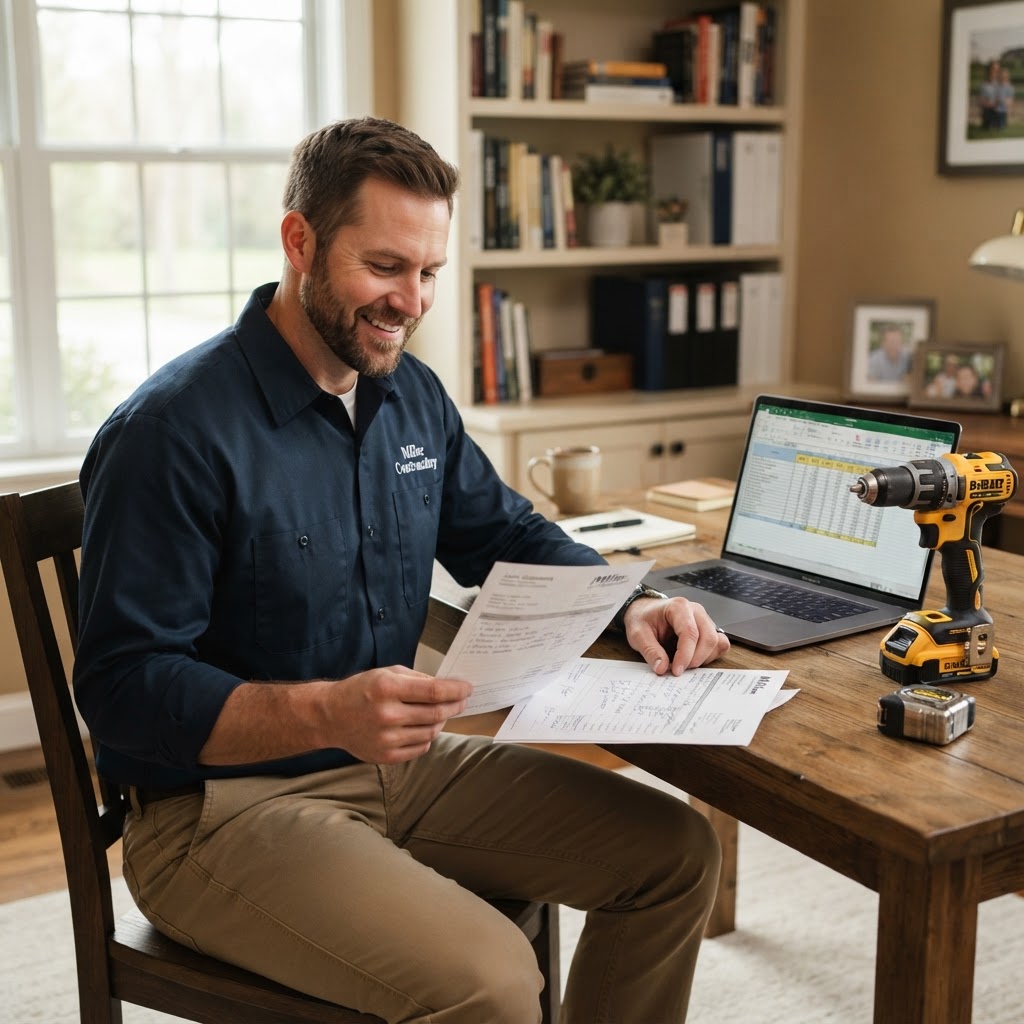
How to Price Your Services for Maximum Profit in 2025
Undercharging is one of the biggest mistakes home service business owners make. This guide breaks down proven pricing strategies to help contractors and tradespeople set rates that cover costs, beat the competition, and maximize profit margins. Whether you're an electrician, plumber, or HVAC tech, it's time to get paid what you're worth.
How to Price Your Services for Maximum Profit in 2025
Most contractors are leaving serious money on the table. Not because they do bad work, but because they guessed at their prices and never looked back. Here is how to fix that.
Why Most Tradespeople Underprice Their Work
It usually starts the same way. You need the job, so you price low to win it. Then you price the next one the same way. A year later you are busy every single week and somehow still stressed about money.
That is the underpricing trap.
A plumber in Houston running 50-hour weeks should not be scraping by. An HVAC tech in Tampa covering three calls a day deserves a real profit margin. The problem is not the market. The problem is the pricing model.
Learning how to price your services for maximum profit is not about being greedy. It is about running a real business instead of an expensive hobby.
Start With Your Actual Costs
Before you set a single price, you need to know your numbers. Most contractors skip this step. That is why they lose money on jobs they thought were profitable.
Calculate Your True Cost Per Hour
Add up everything it costs to keep your business running each month:
- Truck payments and fuel
- Insurance (liability, workers comp, vehicle)
- Tools, equipment, and replacements
- Phone, software, and admin costs
- Your own wages and any employee wages
- Marketing and advertising
- Taxes (set aside at least 25-30% of net income)
Divide that monthly total by the number of billable hours you actually work. Not the hours you are awake. The hours a customer pays for.
If your monthly overhead is $8,000 and you bill 120 hours a month, your break-even rate is about $67 per hour. That is before profit. That is just to keep the lights on.
Know Your Billable Hour Reality
A lot of contractors assume they bill 40 hours a week. In practice it is closer to 25 to 30. You drive, you quote, you handle calls, you deal with supply runs. None of that gets billed directly.
Factor that in. It changes everything.
Choose the Right Pricing Method
There is no single right way. But there is definitely a wrong way, and that is copying what the guy down the street charges without knowing his costs.
Hourly Rate Pricing
Simple and transparent. Works well for service calls, repairs, and jobs where scope is unclear up front.
A fair hourly rate for a licensed electrician in California might be $95 to $150 per hour. A plumber in Florida doing service work might charge $85 to $130. Those are not random numbers. They reflect real labor costs, overhead, and a reasonable profit margin built in.
To set your rate:
- Calculate your break-even cost per hour (as above)
- Add your target profit margin (aim for at least 20-30%)
- Check that the number is competitive in your specific market
That last step matters. What works in Los Angeles may not fly in a smaller market in central Texas.
Flat Rate Pricing
This is where experienced tradespeople make more money. You charge a fixed price for a defined job, regardless of how long it takes.
If you are good at what you do, a job that takes a newer tech 3 hours might take you 90 minutes. With hourly pricing, you get punished for being efficient. With flat rate pricing, you get rewarded.
A toilet replacement might be $250 to $350 flat. A panel upgrade might be $1,800 to $2,500 depending on scope. You set the price based on what the job should cost at your standard efficiency, not your worst day.
Build a flat rate book. Start with your 20 most common jobs. Price them properly. Stick to them.
Project-Based Pricing for Larger Work
For roofers, general contractors, painters, and landscapers doing bigger projects, you need to price by the job.
Break it down:
- Materials cost (get real quotes, add 10-15% for waste and overruns)
- Labor hours estimated, multiplied by your true labor rate
- Subcontractor costs if applicable
- Overhead allocation
- Profit margin on top, usually 15-25% for larger projects
A painting contractor in Dallas quoting a full exterior repaint on a 2,500 square foot home should not just eyeball it. Know your square foot rate, know your material costs, and build your margin in from the start.
Stop Competing on Price Alone
This is probably the most important section in this post.
If the only reason a customer picks you is because you are the cheapest, you have the worst possible customer. They will nickel and dime you, leave bad reviews over nothing, and tell their friends to call someone even cheaper.
Justify Your Rate With What You Offer
Customers are not just paying for the work. They are paying for:
- Someone who shows up on time
- A licensed and insured professional
- Clean work with no mess left behind
- A warranty they can actually count on
- A person who answers the phone
When you present your price, present your value. A homeowner in Miami who has been burned by a flaky contractor before will pay more for someone reliable. Make sure they know why you are worth it.
Raise Your Prices and See What Happens
Seriously. If you have not raised your prices in the last 12 months, you have effectively given yourself a pay cut. Materials cost more. Fuel costs more. Everything costs more.
A 10% price increase on a $300 job is $30. Most customers will not flinch. And the ones who do flinch are often not your best customers anyway.
Seasonal and Market Adjustments
Smart contractors adjust their pricing based on demand.
An HVAC company in Texas can charge more for AC repairs in July than in October. That is not gouging. That is basic economics. Your time is worth more when everyone needs it at once.
Same idea for landscapers in Florida heading into spring, or roofers after a storm system rolls through. Know your peak seasons and price accordingly.
Also watch what is happening in your local market. If material costs spike, update your pricing fast. Do not wait until you have already locked in three jobs at the old rate.
Handling Price Objections
Someone will always say you are too expensive. Here is how to handle it without caving.
"That seems high." Ask what they were expecting. Listen. Then explain what is included. Do not apologize for your price.
"The other guy quoted less." Ask what that quote included. Often it does not include the same scope, warranty, or quality of materials. Sometimes it does, and that guy is just cheap. Let him have that customer.
"Can you do any better on price?" You can offer to reduce scope, not margin. "I can do just the back portion this season and quote the front separately" is a fine answer. Discounting the same job for no reason trains customers to always ask for discounts.
Use Technology to Price Faster and More Accurately
Quoting jobs on the back of a napkin is fine when you are starting out. Once you are doing volume, it costs you time and money.
Good quoting software lets you:
- Build quotes from a saved price list
- Send professional quotes fast
- Track what was accepted and what was not
- See where you are winning and losing on price
The faster you can send a quote, the higher your conversion rate. Customers do not always pick the cheapest option. They often pick whoever responded first with a professional-looking proposal.
A Simple Pricing Checklist for 2025
Before you set or update any price, run through this:
- Do you know your monthly overhead to the dollar?
- Have you calculated your real billable hours per month?
- Does your price include at least a 20% profit margin?
- Have you raised prices in the last 6 to 12 months?
- Do your flat rates reflect your current material costs?
- Are you adjusting for seasonal demand in your area?
If you answered no to more than two of those, your pricing needs work.
Final Thoughts
Knowing how to price your services for maximum profit is a skill. It takes time to get right. But once you do, everything changes. You take home more from the same number of jobs. You stop chasing volume just to cover costs. You build something that actually works for you.
Start with your numbers. Build your rates from there. Raise them when the market allows. And stop competing with the cheapest guy in town.
Ready to quote faster and manage your jobs in one place? Check out Onwork, a tool built for home service businesses that helps you send quotes, track jobs, and stay on top of your business without the paperwork headache.
Disclaimer: It is the user’s responsibility to verify the information in this article and seek professional advice where appropriate. Onwork provides this content for general informational purposes only and does not accept responsibility for decisions made based on it.