
Working ON Your Trade Business, Not Just IN It
If you're a UK tradesperson constantly firefighting jobs, chasing invoices, and doing everything yourself, you're working IN your business — not ON it. Discover practical strategies to help you delegate, systemise, and take back control so your trade business can grow without depending entirely on you.
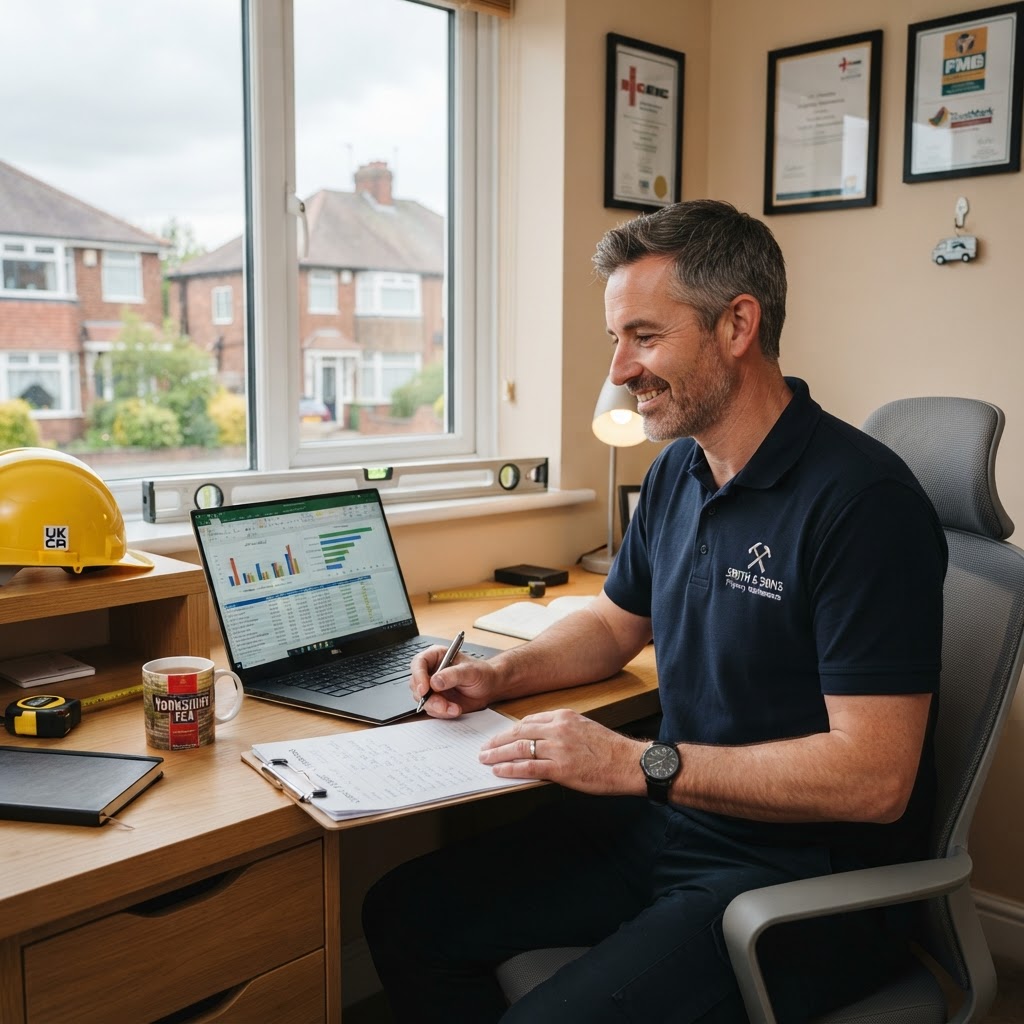
Working ON Your Trade Business, Not Just IN It
If you're an electrician, plumber, or roofer reading this at 9pm after a full day on the tools, this is for you. Most tradespeople in the UK are brilliant at their craft but terrible at running a business. That's not an insult. It's just the truth, and it's fixable.
The Trap Every Tradesperson Falls Into
You start out solo. Jobs come in, you do the work, money lands in the account. Then you get busier. Maybe you take on a couple of lads. Before long, you're still on the tools every day, you're quoting jobs at night, chasing invoices at the weekend, and somehow your business depends entirely on you showing up in person every single day.
That's working IN your business.
Working ON it means something different. It means stepping back enough to make decisions about where the business is going, not just what job you're doing tomorrow. Understanding how to transition from working IN your business to working ON it is honestly one of the most important shifts you'll ever make as a tradesperson.
Most people never make it. They stay stuck until they burn out or pack it in.
Why This Is So Hard for Tradespeople Specifically
There's a culture in the trades that says if you're not on the tools, you're not really working. Your clients expect you there. Your lads expect you there. You probably feel guilty sitting at a desk.
But here's the thing. If you get ill, break a wrist, or just want a week off in Tenerife, what happens to the business? For most one-man bands and small contractors in Manchester, Birmingham, London, wherever, the honest answer is: it stops.
That's not a business. That's a job you can't quit.
What "Working ON the Business" Actually Means
This phrase gets thrown around a lot without anyone explaining what it looks like in practice for a tradesperson.
Here's what it actually means:
- Setting up systems so jobs get done the same way every time, whether you're there or not
- Hiring and training people who can represent your business the way you would
- Tracking numbers so you know your margins, your best jobs, and where you're losing money
- Marketing and reputation building so enquiries come in without you personally chasing them
- Planning ahead instead of just reacting to whatever lands in your inbox
None of this is glamorous. But it's what separates a tradesperson with a profitable, growing business from one who's permanently exhausted and spinning plates.
How to Actually Make the Transition
Step 1: Document What You Do
Before you can hand anything off, you need to know exactly how you do things.
Write down your process for quoting a job. Write down how you onboard a new customer. Write down how you handle complaints. It doesn't need to be fancy. A Word document or even handwritten notes will do.
This feels like a waste of time. It isn't. Once it's written down, someone else can follow it. That's the point.
Step 2: Work Out Where Your Time Actually Goes
Spend one week tracking your time in rough 30-minute blocks. Most tradespeople are genuinely shocked by what they find.
You might spend 12 hours a week driving to jobs that could be batched better. Or 6 hours chasing unpaid invoices that a simple automated reminder would handle. Or 4 hours answering the same questions on the phone that a decent FAQ page would deal with.
Once you see where the time is going, you can start fixing it.
Step 3: Identify What Only YOU Can Do
There are some things only you should be doing. Probably not many.
Signing off on major quotes. Meeting key clients. Making decisions about the direction of the business. Hiring people.
Almost everything else, answering calls, scheduling jobs, ordering materials, chasing invoices, can eventually be handled by someone else or by software.
Start delegating the small stuff first. Even one hour a day handed off to someone else gives you breathing room to think.
Step 4: Sort Out Your Finances So You Can See What's Actually Happening
A lot of tradespeople have no real idea if they're actually profitable. Money comes in, money goes out, and if there's something left at the end of the month it feels like a win.
That's not good enough once you're trying to grow.
You need to know:
- Your average job margin (revenue minus materials, labour, fuel, and your own time)
- Which types of jobs make you the most money
- What your monthly overheads actually are
- Whether you're pricing correctly
If you're VAT-registered or running through a limited company, your accountant should be helping with this. If you're a sole trader, HMRC's self-assessment records are a start, but you need more detail than that.
Companies House filings won't tell you this. Your day-to-day job data will.
Step 5: Hire Before You Think You're Ready
This is where most tradespeople stall. They wait until they're overwhelmed before they hire anyone, by which point they're too busy to train someone properly.
If you're regularly turning down work, that's your signal. Bring someone on before you're drowning.
Your first hire doesn't have to be another tradesperson. An apprentice, a part-time admin person, or even a virtual assistant for £10 to £15 an hour to handle calls and emails can free up a serious amount of your time.
For a plasterer in Birmingham charging £250 a day, one extra day per week freed up by good admin support could mean £1,000 or more per month in additional jobs you can actually take on.
Step 6: Build a Reputation That Works Without You
Word of mouth is still king in the UK trades. But word of mouth doesn't scale if it only happens in person.
Ask every happy customer for a Google review. Set up a simple process so it actually happens. A text message sent after job completion asking for a review takes about 30 seconds to automate.
Build a basic website. Not fancy. Just clear. What you do, where you cover (London, Birmingham, Manchester, wherever your patch is), your reviews, a contact form. That's it.
A landscaper in Manchester with 80 five-star reviews and a clear website will get calls without doing anything. That's your marketing working without you.
The Mindset Shift Is the Hardest Part
Systems, hiring, tracking, all of that is learnable. The harder bit is giving yourself permission to step back.
Tradespeople often feel like they're letting people down if they're not physically there. But you're not letting anyone down by building something that can run without you. You're building something that actually lasts.
Start small. One afternoon a week where you're not on the tools. Use that time to work on the stuff above. After a month, make it two afternoons. It builds.
Common Mistakes to Avoid
- Hiring mates because it's easy. Hire people who are actually good and who want to be there.
- Ignoring the numbers. Gut feel about margins is usually wrong.
- Trying to do everything at once. Pick one area to fix first. Get it working. Then move to the next.
- Staying on the tools full-time while trying to manage staff. You can't do both properly. Something will suffer.
A Quick Reality Check
None of this happens overnight. A plumber who's been working IN their business for 10 years doesn't transform it in a month.
But small changes stack up. Getting your invoicing sorted saves time this week. That time lets you write a proper quoting process. That process means you can train your apprentice to do the first-visit assessments. That frees up another few hours. And so on.
The goal isn't to never work in your business again. It's to have the choice.
Start Tracking Before You Start Changing
One of the first practical steps is knowing what's actually happening in your business right now. Job by job. Where the money comes from, how long jobs take, which customers are worth having.
That's where a tool like Onwork comes in. It's built specifically for home service businesses, and it helps you track jobs, manage your team, and see what's actually going on without drowning in spreadsheets. If you're serious about making this shift, getting your jobs and data in one place is the right place to start.
You can't improve what you can't see.
Disclaimer: It is the user’s responsibility to verify the information in this article and seek professional advice where appropriate. Onwork provides this content for general informational purposes only and does not accept responsibility for decisions made based on it.


