
Managing a Mobile Workforce: Tips for Field Service Businesses
Running a team of tradies across multiple job sites is no small feat. From scheduling and communication to compliance and accountability, managing a mobile workforce comes with its own set of challenges. Discover practical strategies to keep your field service business running smoothly and profitably across Australia.
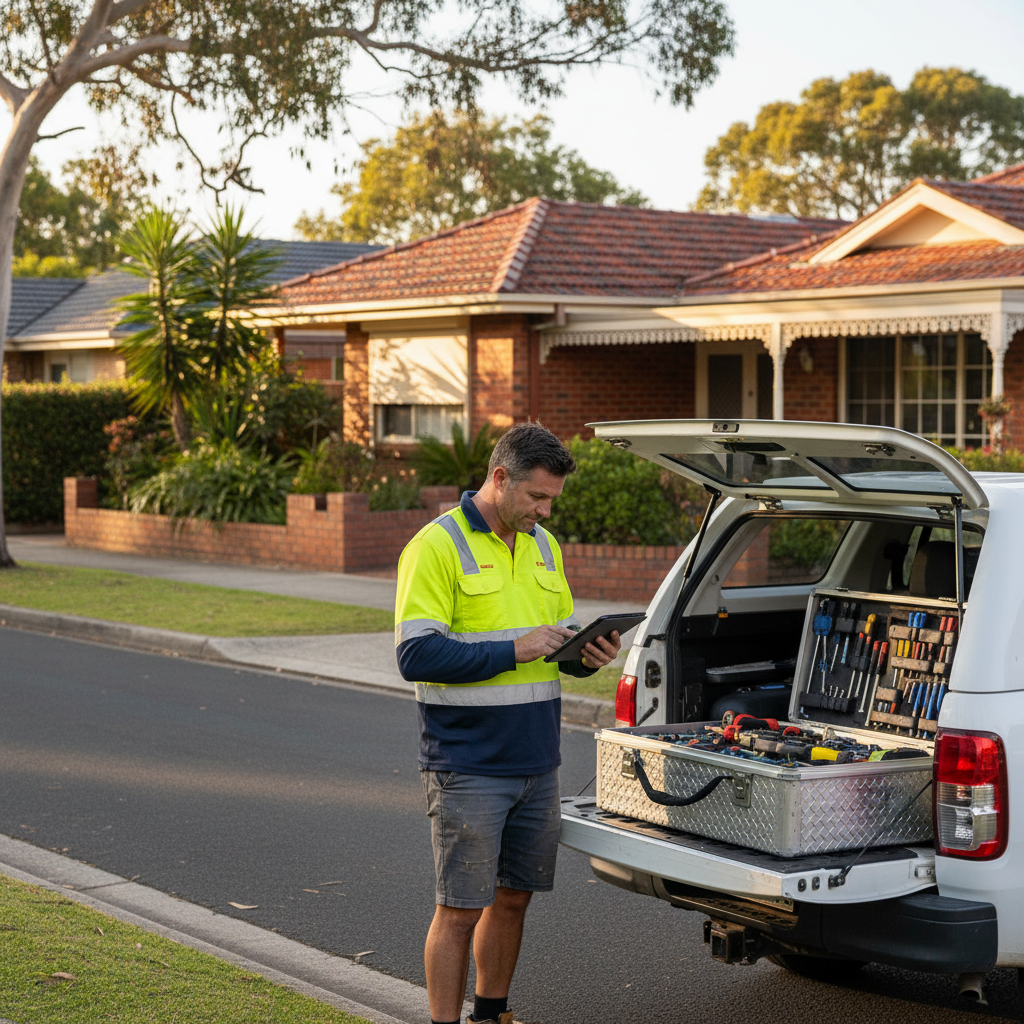
Managing a Mobile Workforce: Tips for Field Service Businesses
Running a team of tradies across multiple job sites is genuinely hard work. You're dealing with no-shows, miscommunication, last-minute cancellations, and jobs that blow out past the quoted time. If you've ever had a customer ring you at 4pm asking where your plumber is, you know exactly what I mean.
Managing a mobile workforce well is the difference between a business that grows and one that constantly puts out fires. These tips are for field service businesses that want to get on top of it.
Start With Scheduling That Actually Works
Most scheduling problems aren't really scheduling problems. They're communication problems. The job was booked but nobody told the tech. The address was wrong. The customer moved the time and it never got updated.
Get your scheduling out of your head, out of WhatsApp, and into one place. It doesn't matter whether you're running four electricians in Brisbane or a cleaning crew across three suburbs in Melbourne. Everyone needs to see the same information.
What good scheduling looks like
- Every job has a clear start time, address, and job description
- Your team gets notified automatically when something changes
- Customers get a reminder the day before (this alone cuts no-shows dramatically)
- You can see, at a glance, who's available and who's overbooked
A single missed job in Sydney traffic can throw out your whole day. Build in buffer time between jobs, especially if your crew is covering a wide area.
Set Clear Expectations With Your Field Staff
This is where a lot of small trade businesses fall apart. You know what a good job looks like. Your team might not. Not because they don't care, but because nobody ever wrote it down.
Think about what you expect at the end of every job:
- Photos taken before and after the work
- Job notes updated in real time, not at 7pm from memory
- Any extra work quoted to the customer before starting it
- The customer asked to sign off on the completed job
These aren't fancy systems. They're basic habits that protect you and your team. An HVAC technician in Melbourne who documents everything is far less likely to get a dispute call two weeks later.
On-site behaviour matters too
Your tradies represent your brand every single time they show up. That means:
- Turning up in the agreed window (not three hours late with no call)
- Wearing clean uniforms or at least looking presentable
- Not leaving a mess on site
- Treating the customer's home with respect
One bad review on Google can cost you ten new customers. That's not an exaggeration. In Brisbane's competitive trades market, reputation travels fast.
Use Real-Time Visibility to Stay in Control
When your team is spread across different sites, you're flying blind without some way to track what's happening. That doesn't mean micromanaging. It means knowing whether jobs are running on time without having to ring six people.
Real-time job tracking gives you:
- Live updates on job status (on the way, on site, completed)
- Early warning when a job is running over time
- The ability to reassign urgent work without a dozen phone calls
- Proof of when your team arrived and left, if a customer questions it
A landscaping company running five crews across western Sydney can't rely on phone calls to stay coordinated. They need a system. The good news is this kind of visibility doesn't require expensive software or a full-time office manager.
Handle Job Documentation Properly
Paper job sheets are a liability. They get lost, they're illegible, and they don't help you when a customer disputes a bill six weeks later.
Digital job documentation changes this. Your team completes the job, updates the notes, takes photos, and the record is stored automatically. You can pull it up in 30 seconds if there's ever a question.
For trade businesses doing insurance work or operating under contracts with body corporates or property managers, proper documentation isn't optional. Fair Work Australia also has record-keeping requirements for employees, and the Australian Consumer Law gives customers rights around service delivery. Good documentation protects you on both fronts.
What to capture on every job
- Job start and end times
- Work completed (in plain language, not just a code)
- Materials used and quantities
- Photos of the completed work
- Customer signature or acknowledgment
This also makes invoicing much easier. When the job record is complete, the invoice almost writes itself.
Invoice Faster and Get Paid Sooner
Cash flow is the thing that kills otherwise healthy trade businesses. You've done the work, the customer is happy, but the money sits unpaid for 30, 45, sometimes 60 days. Meanwhile, you're paying wages and suppliers.
The faster you invoice, the faster you get paid. It really is that simple.
If your team is completing jobs and updating records in real time, there's no reason you can't send an invoice the same day. Some roofers and electricians send the invoice before they've even left the driveway.
A few things that speed up payment:
- Include your bank details and a payment due date on every invoice
- Offer card payment on site (a Square reader costs almost nothing to set up)
- Send automatic payment reminders for overdue invoices
- For repeat customers, look at setting up direct debit or automated billing
Waiting until end of month to batch your invoicing is costing you money. Break that habit.
Build a Simple System for Customer Communication
Customers want to know what's happening. They don't want to chase you. If they have to ring three times to find out when the plumber is coming, they're going to leave a bad review even if the actual work was fine.
Set up automated messages for:
- Booking confirmation (as soon as the job is booked)
- Reminder the day before
- "On the way" notification from your tech
- Follow-up after the job is done
Most customers are busy people. A text message saying "Your technician is 20 minutes away" is genuinely appreciated. It makes your business look professional without you having to do anything extra.
This also reduces the number of inbound calls you get. Fewer calls means you can focus on actually running the business.
Managing a Growing Team Without Losing Your Mind
When you go from two tradies to eight, the problems don't just get bigger. They get different. Suddenly you need to think about onboarding, training consistency, performance tracking, and keeping people accountable without being on their back all day.
A few things that help:
- Onboarding checklists: Every new hire goes through the same process. Nothing gets missed.
- Job quality reviews: Spot-check completed jobs. Not to catch people out, but to maintain standards.
- Regular team check-ins: Even a 15-minute weekly call with your crew keeps everyone aligned.
- Clear escalation paths: Your team needs to know what to do when something goes wrong on site. If they have to ring you for every decision, you'll never have a day off.
The goal is to build a team that can operate without you standing over them. That's what gives you room to grow.
Don't Ignore Your Subcontractors
A lot of trade businesses in Australia rely on subbies, especially during busy periods. Managing subcontractors is different from managing employees, but a lot of the same principles apply.
Be clear about:
- What's expected on every job
- How and when they'll be paid
- How job documentation should be completed
- Who the customer contact is (and whether the subbie should be talking to them directly)
Under Australian contractor law, the line between an employee and a contractor is legally significant. The ATO has specific rules around this. If you're using subbies regularly, make sure the arrangement is set up properly. A conversation with your accountant is worth the $200 it costs.
Keep It Simple and Keep Improving
Managing a mobile workforce doesn't have to be complicated. The businesses that do it well aren't using a dozen different apps or running complicated systems. They've found a few tools that work, trained their team properly, and stuck to the basics consistently.
Start with the things that cause you the most pain right now. Is it scheduling? Communication? Cash flow? Fix one thing, then move to the next.
Small improvements compound over time. A business that's 10% more organised this month than last month will be in a completely different position by the end of the year.
If you're looking for a tool built specifically for home service businesses, check out Onwork. It's designed to help tradies and field service teams manage jobs, scheduling, customer communication, and invoicing all in one place, without the complexity of enterprise software. Worth a look if you're ready to get your operations sorted.
Disclaimer: It is the user’s responsibility to verify the information in this article and seek professional advice where appropriate. Onwork provides this content for general informational purposes only and does not accept responsibility for decisions made based on it.


