
Licensing & Insurance Compliance for Canadian Contractors
Navigating licensing and insurance requirements across Canadian provinces can be overwhelming for home service business owners and tradespeople. Staying compliant not only protects your business from fines and legal trouble but also builds trust with clients. This guide breaks down what you need to know to keep your credentials current and your coverage in order.
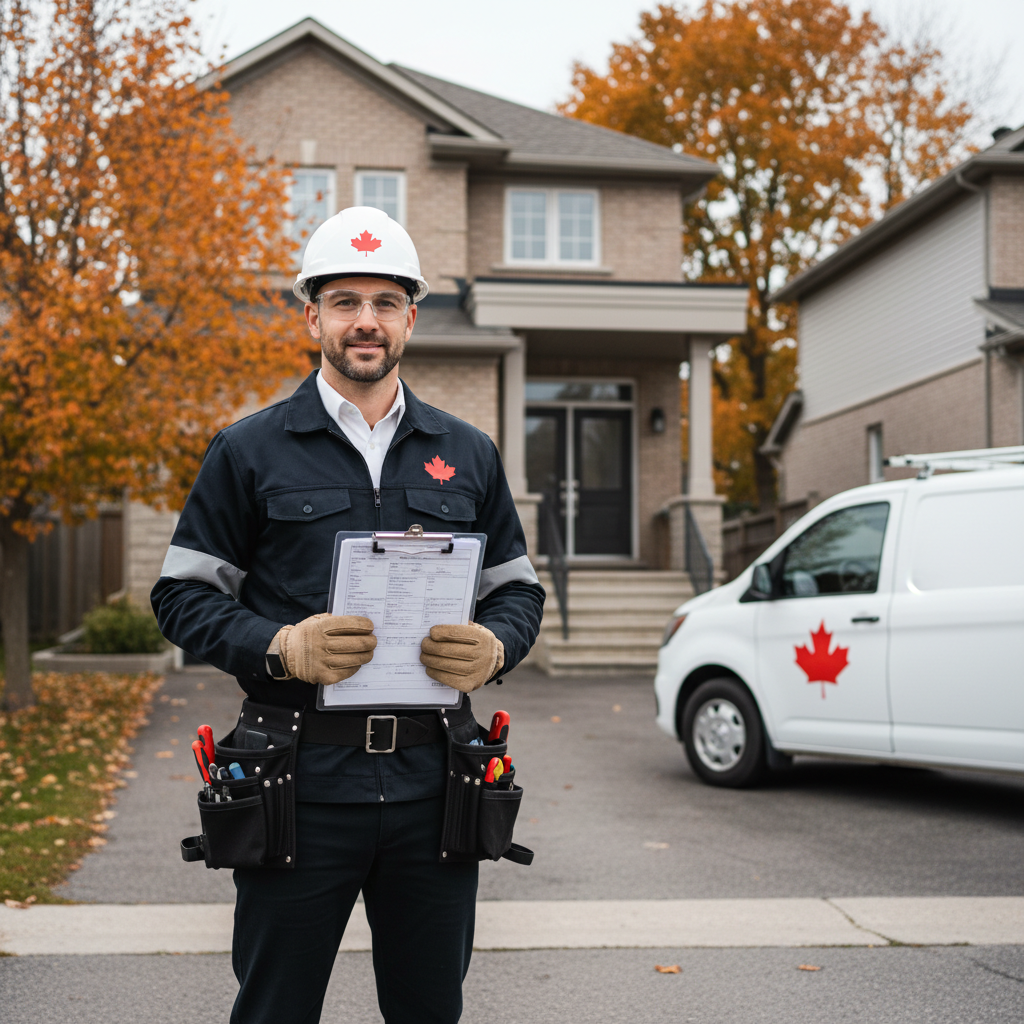
Licensing & Insurance Compliance for Canadian Contractors
Getting caught without the right licence or insurance doesn't just cost you a fine. It can shut down your business overnight. Here's what you actually need to know about how to stay compliant with licensing and insurance requirements as a contractor in Canada.
Why Compliance Matters More Than You Think
A lot of tradespeople treat licensing and insurance as a box-ticking exercise. Pay the fee, file the paperwork, forget about it. That works fine until a job goes sideways.
Say you're a plumber in Ontario working on a bathroom renovation. A pipe fitting fails after you leave. The homeowner makes a claim. Your insurance provider pulls your file and finds your licence lapsed three months ago. They deny the claim. Now you're personally on the hook for the damage, and the homeowner's lawyer is calling.
That scenario plays out more often than people admit. The good news is it's entirely avoidable.
Licensing Requirements Across Canada: Province by Province
Canada doesn't have a single national licensing system. Each province runs its own. This catches a lot of contractors off guard when they take on work outside their home province.
Ontario
In Ontario, most skilled trades fall under the Ontario College of Trades (OCOT), though the regulatory structure has shifted in recent years under the Skilled Trades Ontario (STO) body. Some trades are compulsory, meaning you must be licensed to work. Others are voluntary.
Compulsory trades in Ontario include:
- Electricians (309A and 309C)
- Plumbers (306A)
- Gas Technicians (G1, G2, G3)
- Refrigeration and Air Conditioning (313A and 313D)
- Hoisting engineer trades
If you're in a compulsory trade and you're working without your Certificate of Qualification, you're breaking the law. Full stop. Fines can reach $50,000 CAD for individuals.
Voluntary trades, like painting or landscaping, don't require a government licence to operate. But that doesn't mean you can skip business registration or insurance.
British Columbia
BC uses the Industry Training Authority (ITA) system. Trades are certified through the Red Seal program or BC-specific certification. Electricians, plumbers, gas fitters, and HVAC technicians all need proper certification to work legally in BC.
One thing to know about BC: the BC Safety Authority (BCSA) handles permits for gas, electrical, and boiler work. You need the permit before the work starts, not after. A lot of contractors get this backwards and end up with inspection problems or failed sales deals on homes they've worked on.
Alberta
Alberta's system runs through Alberta Apprenticeship and Industry Training (AAIT). The province uses Journeyman Certificates for most regulated trades. If you're an electrician or pipefitter in Alberta, you need that Journeyman Certificate. Some trades also require a Master certification to run a business or pull permits.
Alberta is also notable for its business licence requirements at the municipal level. Working in Calgary or Edmonton without a valid business licence can result in fines from the city, on top of any provincial issues.
Insurance: What You Actually Need
Licensing gets most of the attention. Insurance tends to be underestimated until something goes wrong.
General Liability Insurance
This is the non-negotiable baseline. It covers third-party property damage and bodily injury that happens because of your work. Most residential and commercial clients in Canada will ask for proof of general liability before you set foot on site.
For a small contracting business, general liability typically starts around $500 to $1,500 CAD per year depending on your trade and annual revenue. Higher-risk trades like roofing or electrical will sit at the higher end, or beyond it.
A bare minimum coverage amount is usually $2 million CAD per occurrence. Many larger property managers and general contractors won't work with you unless you carry $5 million.
Tools and Equipment Insurance
Your tools are how you make money. If a $4,000 CAD table saw gets stolen from a job site, general liability won't cover it. Tools and equipment coverage will. It's usually inexpensive to add and worth every dollar.
Commercial Auto Insurance
If you drive a van or truck for work, personal auto insurance won't cover you if you're in an accident while on the job. You need a commercial auto policy. A lot of contractors skip this one and don't find out until they file a claim.
Workers' Compensation
If you have employees, workers' compensation through your provincial WCB (or WorkSafeBC in BC) isn't optional. It's a legal requirement. Even some subcontractors can trigger WCB obligations depending on how the relationship is structured.
How to Stay Compliant With Licensing and Insurance Requirements Year-Round
Compliance isn't a one-time event. It's an ongoing process. Here's a practical system that actually works.
1. Track Every Renewal Date
Write down every expiry date in one place. Your licence renewal, insurance policy, business registration, WCB account, vehicle registration. Set reminders 60 days out so you're not scrambling at the last minute.
A simple spreadsheet works. A calendar works. What doesn't work is leaving it to memory.
2. Keep Certificates Easy to Access
When a client or GC asks for proof of insurance, you want to send it in five minutes, not five days. Keep digital copies of your Certificate of Insurance, your trade licence, and your business registration in cloud storage or an email folder you can pull up from your phone.
3. Understand Permit Requirements Before You Start
In Ontario, BC, and Alberta, most mechanical, electrical, and structural work requires a permit. The contractor is usually responsible for pulling the permit, not the homeowner.
Working without a permit is a liability issue, not just a regulatory one. If something goes wrong on unpermitted work, your insurance coverage can be voided.
4. Check Subcontractor Compliance Too
If you bring in subcontractors, their gaps become your problem. Before a sub sets foot on your job, get:
- Proof of their trade licence or certification
- A copy of their Certificate of Insurance naming your business as additionally insured
- Their WCB clearance letter
This protects you if a sub causes damage or gets injured on site.
5. Review Your Coverage Annually
Your business changes year to year. Maybe you hired two employees. Maybe you added a new service. Maybe your revenue grew significantly. Any of those things can affect what coverage you actually need.
Sit down with your broker once a year. Tell them what's changed. Let them tell you if your policy still fits.
Common Compliance Mistakes Canadian Contractors Make
These come up again and again. Worth knowing.
- Letting a licence lapse during slow season. Renewals don't wait for busy season. Set the reminder and pay it.
- Assuming personal auto covers work use. It doesn't. Check your policy.
- Not getting a permit because "the homeowner didn't want to pay for it." You carry the liability, not them.
- Treating WCB as optional for subs. It often isn't. Get the clearance letter.
- Buying cheap insurance and missing key coverage. Read what's excluded before you sign.
What Clients Are Actually Looking At
Residential clients, especially in higher-end markets in Vancouver, Toronto, or Calgary, are asking for proof of insurance before they book. Property managers almost always require it. It's no longer just about staying legal. It's about winning jobs.
Contractors who can send a clean Certificate of Insurance within minutes, show their licence number on their website, and explain what their coverage includes close more work than those who can't.
Compliance is a sales tool. It signals that you're professional and that you'll still be around if something goes wrong.
Staying Organised Is Half the Battle
The compliance itself isn't that complicated. The hard part is keeping track of everything while you're running a business day to day.
That's where having the right systems matters. Onwork is built for home service businesses that need to stay organised, manage jobs, and keep client and document records in one place. It won't file your renewal for you, but it can help you run the operational side of your business in a way that makes compliance easier to manage alongside everything else.
If you're running a contracting business in Canada and you're spending more time chasing paperwork than doing work, it's worth having a look.
Staying compliant with licensing and insurance requirements isn't glamorous work. But it's the foundation everything else rests on. Get it sorted once, keep it maintained, and it stops being something you have to think about every time a new job comes in.
Disclaimer: It is the user’s responsibility to verify the information in this article and seek professional advice where appropriate. Onwork provides this content for general informational purposes only and does not accept responsibility for decisions made based on it.



