
Get Paid Faster: Invoicing Tips for Australian Tradies
Late payments can put serious pressure on your cash flow, especially when you're juggling multiple jobs across the week. Whether you're a plumber, electrician, or landscaper, the right invoicing habits can make a real difference to your bottom line. Here's how to get money in the bank faster without the awkward follow-up calls.
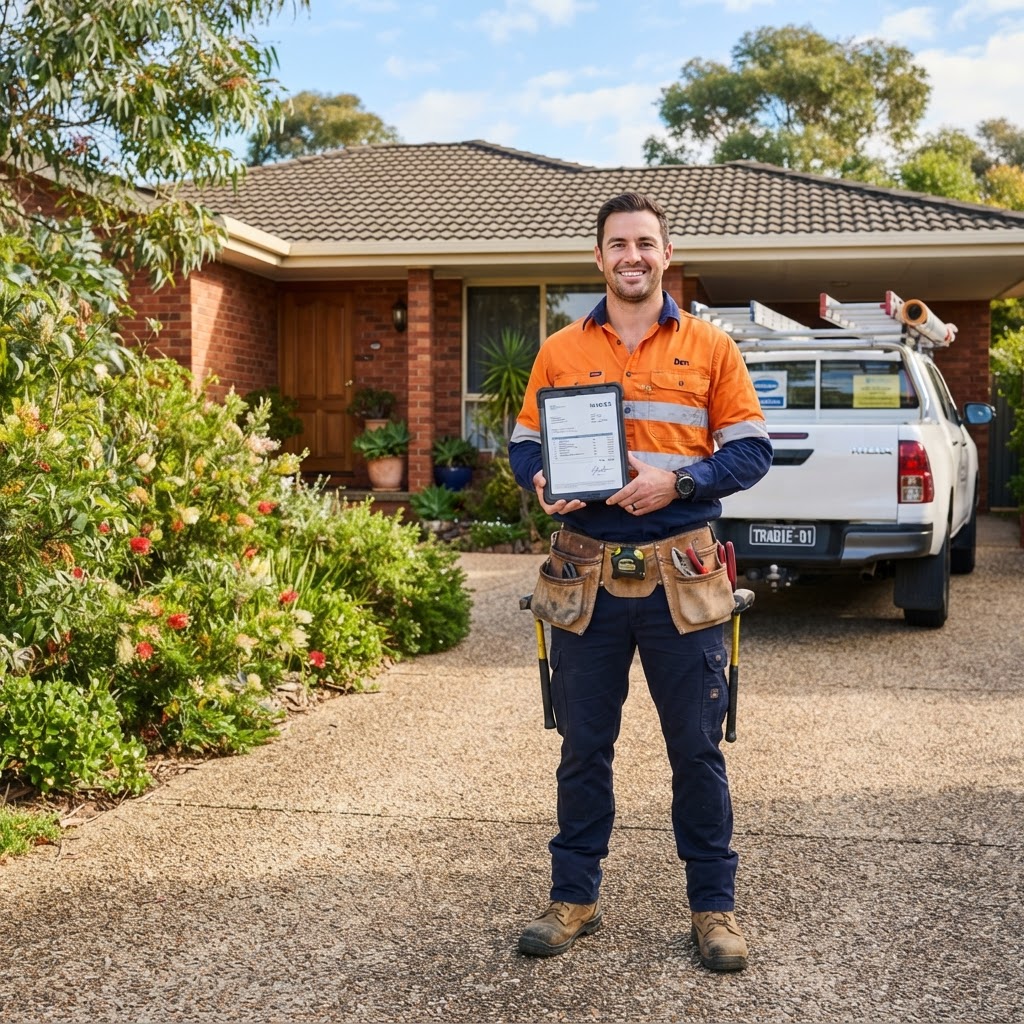
Get Paid Faster: Invoicing Tips for Australian Tradies
Late payments are killing cash flow for tradies all over Australia. If you've ever finished a job in Brisbane on Friday and still hadn't seen a cent by the following Wednesday, you already know the problem. Learning how to get paid faster starts with fixing how you invoice.
Why Your Invoicing Process Is Costing You Money
Most tradies are brilliant at the work. The tiling, the wiring, the plumbing, the painting. But the paperwork? That's where money gets lost.
A slow or messy invoicing process gives clients an excuse to delay. An invoice that arrives three days after the job, has the wrong ABN, or lacks clear payment terms is easy to ignore. Clients aren't always trying to rip you off. Sometimes they're just waiting for you to follow up.
The fix isn't complicated. It just takes a bit of structure.
Get Your Invoice Out the Door Immediately
This is the single biggest change most tradies can make. Send the invoice the same day the job is done. Ideally, send it before you leave the driveway.
When a client has just watched you fix their hot water system, they feel good about paying. That goodwill fades fast. By the time Tuesday rolls around and they've had a busy weekend, your invoice is just another thing in their inbox.
Same-day invoicing isn't just good practice. It signals that you run a professional operation.
If you're doing larger jobs in Sydney or Melbourne where progress payments are involved, set a schedule upfront and invoice on the agreed dates without fail. Don't wait to be asked.
What Every Australian Tradie Invoice Must Include
There are legal requirements in Australia around invoicing, especially once you're registered for GST. Get these right every time.
Your invoice must include:
- Your business name and ABN
- The word "Tax Invoice" if you're registered for GST
- The date of issue
- A unique invoice number
- A description of the work completed
- The amount charged, with GST shown separately if applicable
- Your payment details (BSB and account number, or a payment link)
Missing any of these can slow things down. A client's accounts team in a commercial job won't process an invoice without a proper ABN and tax invoice header. That's weeks of delay right there.
Write Clear Payment Terms and Put Them on Every Invoice
Vague payment terms create vague results. "Payment upon completion" means nothing. "Payment within 30 days" is easy to abuse.
Be specific. Try something like:
- Due within 7 days of invoice date
- Payment due by [specific date]
- 50% deposit before work begins, balance within 5 days of completion
For residential jobs, 7 days is reasonable and most homeowners expect it. For commercial clients, you might accept 14 to 30 days, but don't just go along with 60-day terms without pushing back.
State your terms clearly at the quoting stage too. Put them in your quote, your job acceptance form, and your invoice. That way, no one can say they didn't know.
Take a Deposit Before You Start
This one makes a big difference. Asking for a deposit upfront does two things. It filters out time-wasters and it puts money in your account before you've spent a cent on materials.
For most residential jobs, a 30 to 50 percent deposit is standard and clients accept it. For bigger projects, a plumber in Melbourne doing a bathroom renovation might take 30% upfront, 40% at rough-in, and 30% on completion.
Some tradies feel awkward asking for deposits. Don't be. It's normal business practice and it protects both parties.
Make It Easy to Pay You
If paying your invoice requires effort, people put it off. Remove every possible obstacle.
Think about what you're currently offering. If the only option is a bank transfer, you're relying on the client to open their banking app, enter your BSB and account number, and actually do it. That's a lot of steps for a busy person.
Consider offering:
- Bank transfer with your details clearly visible on the invoice
- PayID so clients can just use your ABN or phone number
- Card payment via a tap-on-phone solution (Square and Stripe work well for tradies)
- Payment links directly from your invoicing software
The easier you make it, the faster it happens. A landscaper who takes card payments on the spot at job completion gets paid that day. The one who sends a bank transfer invoice might wait a week.
Follow Up Without Being Awkward About It
Chasing payment feels uncomfortable for a lot of tradies. But you did the work. You're entitled to be paid.
Build a simple follow-up routine:
- Invoice sent same day as job completion
- Friendly reminder the day before due date ("Just a heads-up, your invoice is due tomorrow")
- Follow-up on the due date if unpaid ("Your invoice was due today, please let me know if you have any issues")
- Phone call two days after the due date
Most late payments are just forgetfulness. A polite reminder usually does the job.
If you still haven't been paid after two weeks, send a formal overdue notice in writing. State the amount, the original due date, and give a final date to pay before further action. In most states, you can charge interest on overdue invoices if your terms include it, so put that clause in your standard terms.
Use Software That Does the Heavy Lifting
Handwritten invoices or Word documents do the job, but they slow you down and make follow-up painful.
Good invoicing software lets you:
- Create and send invoices from your phone on site
- Set automatic payment reminders
- Track which invoices are paid, overdue, or pending
- Record expenses and attach receipts
- Generate basic financial reports
For Australian tradies, you want something that handles GST correctly, includes your ABN, and sends proper tax invoices. Most decent platforms do this automatically once you set it up.
The time you save on admin can go straight back into billable work.
Watch Out for These Common Mistakes
Even experienced tradies make these errors. They're easy to fix once you know to look for them.
Sending invoices late. Already covered, but worth repeating. Every day you wait is a day you've given the client to forget or deprioritise.
Wrong or missing details. An invoice without an ABN, or with the wrong GST calculation, will get sent back. That's another few days gone.
No payment terms stated. Without a due date, there's no deadline. Clients pay when they feel like it.
Not following up. Some tradies send an invoice and wait indefinitely. They assume chasing payment is rude. It's not. It's running a business.
Accepting verbal promises. "I'll sort it out end of the week" isn't payment. Keep following up until the money is in your account.
A Word on Bigger Commercial Clients
Commercial work in Sydney or Melbourne often comes with payment terms that are stacked in the client's favour. Thirty days. Sixty days. Even ninety in some cases.
You don't have to accept that. Especially as a smaller operator, you have the right to negotiate. Counter-propose 14 or 21 days. Some will push back, but many won't.
Also get in the habit of submitting invoices through whatever system the client uses. Some larger clients or builders have specific invoicing portals. Find out before you start the job. Missing their cut-off date can delay payment by an entire billing cycle.
Small Habits That Make a Big Difference
Getting paid faster isn't one big fix. It's a handful of small habits done consistently.
- Invoice immediately after every job
- Use clear, specific due dates
- Take deposits as standard practice
- Follow up on a regular schedule
- Make payment as easy as possible
- Keep your records tidy so you always know who owes what
Do these things consistently and your cash flow will improve. Not because clients suddenly become more generous, but because you've removed all the friction that lets them delay.
Start Getting Paid Faster Today
If you want to put these tips into practice without spending hours on admin, take a look at Onwork. It's built for home service businesses and lets you create professional invoices, track payments, and follow up automatically, all from your phone.
Less time chasing. More time doing the work that actually pays.
Disclaimer: It is the user’s responsibility to verify the information in this article and seek professional advice where appropriate. Onwork provides this content for general informational purposes only and does not accept responsibility for decisions made based on it.


